

Microscopic Flaws: What Jewelers See That Most Shoppers Never Notice (Part 1)
When most people shop for jewelry, they focus on the obvious things: sparkle, color, size, and overall style. Does the diamond sparkle in the light? Does it look good on the hand or around the neck? Does it fit the budget? What many shoppers don’t realize is that jewelers are evaluating completely different aspects of a piece - details that are so small they’re invisible to the naked eye. Jewelers evaluate metals and gemstones under magnification, which is how they see a hidden world of microscopic flaws and characteristics that can affect durability, value, and long term wearability.
These tiny details don’t mean a piece of jewelry is “bad.” Many microscopic flaws are completely normal and even expected in fine jewelry. But understanding what jewelers look for, and why, can help you shop more confidently, ask better questions, and appreciate quality craftsmanship. In Part 1 of this series, we’ll explore some of the things jewelers notice under the microscope.
Why Jewelers Use Microscopes
In any fine jewelry store or appraisal office, you’ll almost always see a microscope. Jewelers rely on magnification because the human eye can’t catch the small issues that may become bigger problems over time. At 10x, 20x, or higher magnification, things that look perfectly fine to the naked eye can reveal important details.
Microscopes allow jewelers to evaluate structural integrity, craftsmanship quality, gemstone characteristics, and signs of wear or damage. A prong that looks smooth may actually be thin or cracked. A diamond that appears clean may have inclusions that affect the durability. This isn’t meant to scare shoppers, but these tools exist to ensure buyers are fully informed about what they’re purchasing.
Inclusions vs. Flaws
One of the most misunderstood aspects of jewelry is the difference between inclusions and flaws. In gemstones, inclusions are internal characteristics that formed naturally as the stone grew. There are many different types of inclusions:
-
Crystal Inclusions: Crystal inclusions are other crystals trapped inside a diamond during its formation. These inclusions can vary in size, shape, and color. These can appear in many forms, such as -
-
Spots and Clouds: Small, scattered crystals or cloud-like formations within the diamond.
-
Needles: Long, thin crystal inclusions resembling needles.
-
Mineral Crystals: Crystals of other minerals with distinct shapes and colors.
-
Pinpoint Inclusions: Pinpoint inclusions are tiny spots within a diamond. They are typically small mineral crystals or gas bubbles. It’s important to note that these can affect the brilliance of the diamond.
-
Feather Inclusions: Feather inclusions are fractures that look like feathers. They can affect a diamond's durability.
-
Knots: Knots are crystals that reach to the surface of the diamond and can look like a bump on the stone. Not only will a knot affect the clarity of the diamond, but can also cause the diamond to be easily damaged if the stone is hit near the inclusion.
-
Cavities: Cavities are open spaces within a diamond that are caused by trapped gas within the stone during formation. If a cavity is large enough, it can affect the durability of the stone.
-
Cleavage: Cleavage appears as a flat, reflective surface and can affect the structure of the diamond, making it more prone to cracking.
-
Bearding: Bearding is a group of hair-like fractures on the girdle of the diamond and are usually caused during cutting or polishing of the sto

Flaws, on the other hand, refer to external features such as chips, abrasions, or surface fractures. Jewelers use magnification to determine whether they’re seeing natural characteristics or structural concerns.
In metal, flaws usually result from manufacturing and may include porosity, pits, tool marks, incomplete polishing, or solder problems.
Microscopic Gemstone Issues
When looking at a gemstone under magnification, jewelers aren’t just assessing color and clarity, they’re also looking for durability concerns. Fracture placement is especially important. Inclusions near the girdle or corners of a diamond increase the risk of chipping. Surface reaching inclusions can also make the gemstones more vulnerable for damage, especially with colored gemstones.
Microscopic Diamond Issues
Diamond cut quality is often discussed in terms of proportions and light performance, but under magnification, jewelers evaluate finer details. They examine how the facets meet, overall symmetry, and polish quality. Jewelers also look for naturals, which are small portions of the original crystal left unpolished. The girdle is another key focus because a thin girdle can increase the risk of chipping, while a thick girdle adds unnecessary weight.
Metal Porosity
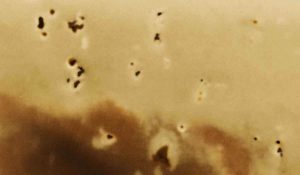
One of the most common microscopic metal issues is porosity, tiny air pockets trapped during casting. Under magnification, porosity appears as small pits or spongy areas in the metal. Mild porosity is fairly common and not always problematic, but excessive porosity can weaken prongs, shanks, and settings over time. Porosity is more common in cast jewelry than hand fabricated pieces and can be minimized through proper casting and finishing techniques.
Final Thoughts
Microscopic flaws may sound intimidating, but they’re simply part of what makes fine jewelry fascinating. When jewelers examine a piece under magnification, they’re assessing how well it’s made, how it will hold up over time, and whether it’s a good fit for the wearer. Many inclusions and minor metal imperfections are completely normal, especially in natural gemstones and cast jewelry, and they don’t automatically make a piece bad.
Understanding what jewelers see that most shoppers never notice helps explain price differences that aren’t obvious at first glance, reinforces the importance of professional inspections, and highlights true craftsmanship..
In Part 2 of this series, we’ll take a closer look at additional microscopic flaws so you'll know what’s a real red flag and what’s simply part of the normal jewelry production process.